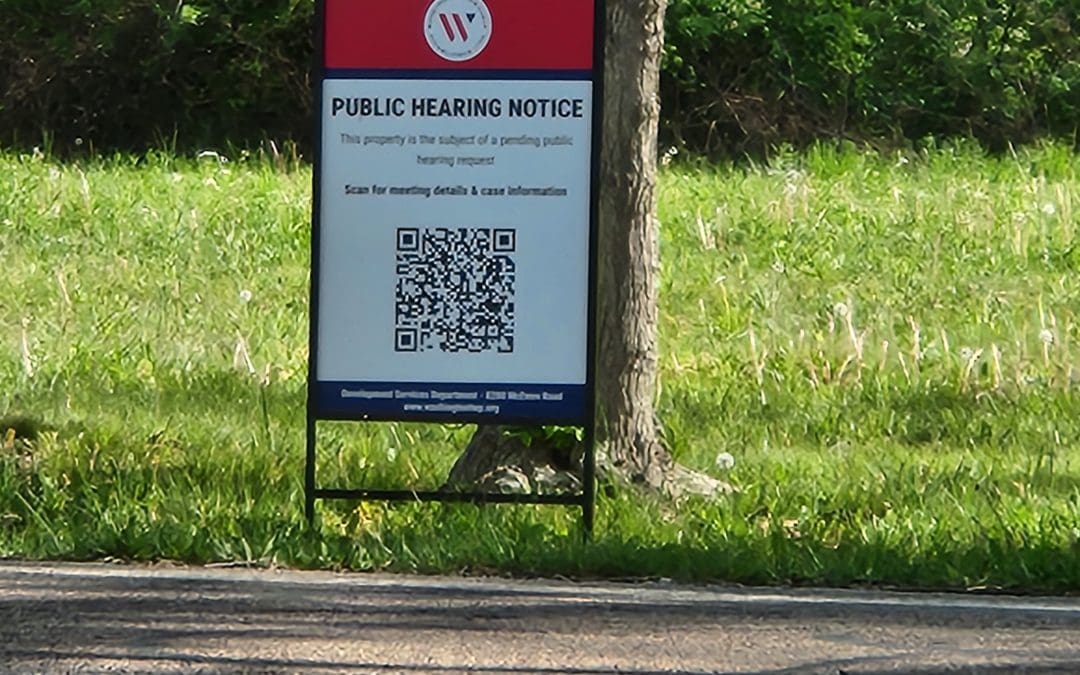
Don’t Ignore These “SIGNS” – it could be important for YOU to attend the meeting and to speak up… property rights are becoming an increasingly important issue for homeowners, buyers, and sellers navigating zoning regulations, permits, setbacks, and renovation projects. Many homeowners never realize how complex these issues can become until a repair, replacement, or complaint suddenly places their property under review.
Property rights are probably not something most homeowners think about every day. When people buy a home, they are focused on the excitement of the purchase, the neighborhood, the layout, financing, schools, and future plans for the property.
What many people do not realize is how zoning regulations, setback requirements, permits, and legal non-conforming structures can suddenly become very important years after closing.
That reality became very clear during a recent Washington Township zoning appeals meeting I attended.
Originally, I attended because one of the agenda items involved my own neighborhood. However, by the end of the evening, my REALTOR® perspective was fully engaged because every case reinforced how important local knowledge truly is when buying, selling, or improving a property.
Older Properties Can Create Modern Problems
The first case involved aging homeowners who simply wanted to improve their property so they could continue enjoying their home long term.
At first glance, the request seemed completely understandable.
However, the original home and structures already failed to meet current setback requirements. Because of that, even improving and updating the property required a variance request before the work could move forward.
The board ultimately approved the request after reviewing the intended use of the property and determining the changes would not negatively impact neighboring homes.
Still, the case highlighted an important issue many homeowners never think about.
Just because a structure already exists does not automatically mean it complies with today’s zoning standards.
When Neighbors, Rules, and Property Rights Collide
The second case created the most discussion in the room.
A homeowner had recently completed improvements on a corner lot that included fencing and a parking pad area. The zoning issue specifically centered on the requested 8-foot fence height, which exceeded the normal 6-foot limitation.
The homeowner had submitted plans, received approval, and completed the work quickly. However, questions later arose regarding how the approval process had been interpreted and whether the additional fence height aligned with township regulations.
As the discussion unfolded, it became very clear how differently neighbors can view property rights and neighborhood expectations.
Some residents fully supported the homeowner and believed the improvements enhanced the property. Others strongly opposed the request and believed previous restrictions should continue applying exactly the same way today.
Because of the unique topography of the lot and questions surrounding the permit process, the board chose to continue the case for additional clarification and review.
After the continuance was announced, one attendee became increasingly vocal and disruptive toward the meeting proceedings and others in attendance. He was eventually asked to leave the room so the remaining cases could continue in an orderly manner.
What stood out to me most was not simply the disagreement itself. It was how quickly property issues can become emotional once neighbors, opinions, and regulations all collide.
Even a Deck Replacement Can Trigger Zoning Review
The final case involved homeowners replacing an aging deck that had become unsafe.
The issue was not the deck itself. The concern centered on the fact that the original structure already failed to meet current setback requirements. Because the homeowners planned to replace the deck rather than simply repair portions of it, the project triggered a variance review process.
The homeowners explained that removing the deck entirely was not a realistic option because the exterior doors would then open to a significant drop below.
The variance was ultimately approved.
However, this case led me to ask an important question afterward as a REALTOR®.
Was the Zoning Issue Ever Disclosed?
As I dug deeper into the situation, I learned the prior setback issue had not been disclosed when the property was sold.
That discovery led me to speak further with township personnel because I wanted to better understand how homeowners and buyers can protect themselves moving forward.
What I learned was eye-opening.
There is not a simple online resource where homeowners can easily search for zoning violations, legal non-conforming structures, or unresolved zoning concerns tied to a property. Likewise, unlike many HOA communities, there is not always a concise and easy-to-find summary of township zoning regulations readily available before beginning repairs or renovations.
Even more surprising, township officials explained that replacing a structure is not always treated as a simple repair. Depending on the scope of work involved, a project can trigger additional zoning review and approval requirements.
That matters far more than many homeowners realize.
Why This Matters for Buyers and Sellers
This is exactly why real estate should never be treated as “just another transaction.”
A REALTOR® should do far more than unlock doors and write contracts. Local experience matters. Understanding community processes matters. Knowing when to ask additional questions matters.
Sometimes a simple phone call to a zoning department can uncover information that saves homeowners time, money, frustration, permit delays, and future resale complications.
More importantly, it can provide peace of mind before renovations or improvements begin.
As buyers become more focused on updating homes, adding fences, improving outdoor living spaces, or making properties fit changing family needs, understanding local regulations becomes increasingly important.
Property Rights Still Matter
I fully understand why zoning regulations exist. Communities need standards for safety, drainage, traffic visibility, and neighborhood compatibility.
However, I also strongly believe property rights matter.
A neighbor may not personally like someone’s fence, landscaping, parking arrangement, or exterior improvements. That alone should not remove another homeowner’s ability to peacefully enjoy their property so long as they are not causing legitimate harm to others.
This meeting reinforced how important balance, fairness, and equal treatment truly are when it comes to Washington Township property rights.
It also reinforced why working with a REALTOR® who understands the local community, processes, and potential concerns can make a significant difference long before — and long after — a closing takes place.
Questions Worth Asking Before You Buy
Before purchasing a property, buyers should ask whether additions, decks, fences, sheds, or exterior improvements were properly permitted. They should also understand whether the property meets current setback requirements and whether future repairs or replacements could trigger zoning review or variance approval.
Those questions may seem small during the excitement of purchasing a home. However, they can become major issues later if they are overlooked.